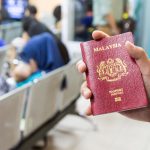
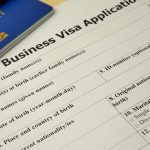
The vietnam visa for Taiwan citizens in 2026 is simpler, faster, and more traveler-friendly than it has ever been — but only if you know exactly what you’re doing. If you’re going in blind, relying on what your colleague told you last year or a thread buried in a travel forum from 2022, there’s a real chance you’ll hit a wall. The rules changed. The system changed. And one outdated assumption at the wrong moment can unravel an entire trip.
Let me get the biggest misconception out of the way immediately: the Visa on Arrival approval letter system is completely dead. Finished. If any website is still offering to sell you a “VOA letter” for travel to Vietnam, shut that tab. It’s either dangerously out of date or an outright scam. Taiwanese travelers visiting Vietnam in 2026 apply for a 90-day e-visa online — that’s the only legal tourist entry route, and it works beautifully when done correctly.
Taiwan and Vietnam have a relationship that goes far deeper than most people realize. Hundreds of thousands of Taiwanese tourists visit Vietnam every year. The routes from Taoyuan into Da Nang, Hanoi, and Ho Chi Minh City are among the busiest in the region, operated by China Airlines, EVA Air, VietJet, and a half-dozen budget carriers. Vietnam’s beaches have practically become a long-weekend destination for Taipei. The food connections are real — Vietnamese cuisine has deep roots in Taiwanese daily life. The two countries are, in every practical sense, neighbors in spirit as well as geography. And yet I still see Taiwanese travelers making avoidable visa errors that cost them their flights. That stops here.

Vietnam E-Visa Requirements for Taiwan Citizens
The vietnam visa for Taiwan citizens runs 90 days from your first entry date, with your choice of single-entry or multiple-entry. The multiple-entry version is worth the minor additional consideration if you’re planning any side trips to Cambodia, Laos, or anywhere else in the region — it lets you re-enter Vietnam without reapplying. Standard processing time is 3 business days. Urgent options exist if you’re reading this the night before your flight (we’ll come back to that).
Here’s what you need to have ready before you start:
- A Republic of China (Taiwan) passport valid for at least 6 months beyond your planned exit date from Vietnam — not your entry date, your exit date
- A clear, high-resolution scan of your passport data page (the page with your photo and personal information, saved as .jpg)
- A recent passport photo — 4×6 cm, white background, no glasses, taken within the last 6 months, saved as .jpg
- A valid international credit or debit card for payment
- Your email address — this is how your approved visa reaches you
- A temporary address in Vietnam — your hotel booking or Airbnb address is fine
- Your planned entry and exit dates and your chosen entry/exit points (airport or border crossing)
One point that catches people: the entry port you declare is locked in once submitted. If you apply listing Da Nang International (DAD) as your entry point and then change your flights to land at Tan Son Nhat (SGN), your visa becomes invalid at the new entry point. You’ll need to reapply. So nail down your routing before you submit.
Denied Boarding at TPE: What Happens When Your Visa Falls Through
It’s 6:15 AM at Terminal 2 of Taiwan Taoyuan International Airport (TPE). You’ve got a China Airlines flight to Hanoi departing in two hours. You’ve been looking forward to this trip for months — four days in Hội An, maybe a motorbike up the coastal road. You hand your documents to the check-in agent. She scans the passport. Pauses. Types something. And then looks up with an expression that every frequent traveler has dreaded at least once.
“Sir, your visa shows a different entry point.”
Or: “Your name on the visa doesn’t match the passport.”
Or simply: “The visa hasn’t been approved yet.”
Three hours isn’t enough time to fix a standard e-visa application. You know it. The agent knows it. And if you’ve booked a non-refundable fare on one of EVA Air’s promotional rates, the clock is ticking in a very expensive direction.
Here’s what I want you to remember in that moment: it is not over. Our Super Urgent Visa Service operates around the clock and can push emergency e-visa clearance through priority processing channels in as little as 2 to 4 hours. I’ve seen this service pull travelers back from the absolute brink — luggage already checked, boarding pass in hand, visa still stuck in processing. The team moves fast because they’ve been doing this for two decades.
💡 Expert Insight from Stanley Ho: “Over my 20+ years handling travel logistics, the most frequent disruption occurs at the check-in desk due to simple application formatting errors. If you are stuck at the airport and denied boarding, don’t panic—our emergency team can secure a new E-visa clearance through priority channels within hours, saving your flight.”
The smarter play, always, is to apply 5–7 days before departure and give yourself a buffer. But if urgency finds you anyway — now you know there’s a lifeline.
The Taiwanese Passport Trap: Name Formatting Errors That Kill Applications
This section is worth reading carefully. I mean that. Taiwanese passport holders deal with a name-formatting challenge on the Vietnam e-visa portal that is specific, consistent, and almost entirely preventable — if you know what to look for.
The Chinese romanization mismatch. Taiwan uses its own romanization conventions for Chinese names, often based on older Wade-Giles or postal system spellings rather than Pinyin. So a traveler whose given name renders as “Chiang” or “Hsieh” in the Taiwanese passport will find those spellings aren’t what they’d expect in a Pinyin-based system. This isn’t a problem in itself — the issue arises when travelers “correct” the spelling to Pinyin when filling out the visa application, because they assume there’s an error. There isn’t. Enter the name exactly as it appears in the passport. Exactly.
The given name / surname field confusion. Taiwanese passports list the family name first in Chinese characters, but Western-format passports often present the surname in capital letters followed by the given name. When filling in the Vietnam portal’s separate fields for “first name” and “last name,” some Taiwanese applicants accidentally reverse the order. The result: a visa that says MING-WEI CHEN when your passport says CHEN MING-WEI. At immigration, that flag will slow you down at minimum — and could result in denial of entry at worst.
Hyphenation in given names. Many Taiwanese given names, when romanized on the passport, are hyphenated: MING-WEI, YU-LING, CHIA-HUI. The Vietnam portal may or may not render the hyphen correctly across different browsers and input methods. Always check the preview before submitting to confirm the hyphen appears as intended, not as a space or missing entirely.
Space vs. hyphen in compound given names. Related to the above — some passports render compound given names with a space (MING WEI) rather than a hyphen (MING-WEI). Match the portal entry to your physical passport exactly, character by character, as it appears in the romanized name fields.
When in doubt, use our application review service. We catch these issues before submission — because a five-minute check is infinitely cheaper than a missed flight.
Skip the Queue: VIP Fast-Track at Vietnam’s Airports
If you’re flying into Vietnam on business — and Taipei to Ho Chi Minh City is one of the busiest business corridors in Southeast Asia — then arriving to a 45-minute general immigration queue after a late-night flight is not a great start to any kind of productive day. Neither is it charming when you’re on a tight leisure itinerary and have an afternoon tour already booked.
Vietnam’s three major international airports — Noi Bai (HAN) in Hanoi, Tan Son Nhat (SGN) in Ho Chi Minh City, and Da Nang International (DAD) — all offer VIP Airport Fast-Track services through authorized premium handlers. The setup is exactly what it sounds like: a personal greeter meets you at the gate, escorts you through dedicated priority immigration lanes, and has you landside while the general queue is still shuffling forward. At SGN during peak periods — and Tet, Golden Week, and summer holidays all qualify — this service easily saves you 45–60 minutes.
Business travelers flying in from TPE for meetings in District 1 will find it pays for itself in the first hour. Families traveling with young children or elderly parents will find it genuinely invaluable. And anyone who has ever stood in a Vietnamese airport queue at midnight after a delayed connection will never need to be convinced twice. Book it alongside your e-visa application — one checkout, everything handled.
How to Apply for Your Vietnam E-Visa in 2026
Getting the vietnam visa for Taiwan citizens processed in 2026 is a clean, entirely online process. Here’s the walkthrough:
- Go to the official portal at evisa.xuatnhapcanh.gov.vn, or apply through VisaOnlineVietnam for guided support and pre-submission review
- Enter your personal details — full name exactly as printed on your ROC passport (refer to the name formatting guidance above before you type a single character), date of birth, passport number, nationality, and contact information
- Upload your documents — a clear .jpg photo of your passport data page, and a recent passport photo on a plain white background
- Fill in your travel information — entry and exit dates, your designated entry point (TPE departures most commonly arrive at HAN or SGN, so confirm which airport you’re flying into), and your temporary address in Vietnam
- Pay the application fee using a valid international credit or debit card
- Submit and wait — standard processing is 3 business days; urgent processing is available for 2–4 hour turnaround
- Receive your approval by email — print it or store it on your phone; Vietnam accepts both formats at immigration
That’s the whole process. No embassy visit. No waiting in a consulate line. No courier services, no approval letters, no extra airport counters. Just an online application, a few uploaded files, and a visa delivered to your inbox.
Frequently Asked Questions
Can Taiwan citizens still use the Visa on Arrival system in 2026?
No — and I want to be unambiguous about this. The Visa on Arrival approval letter system that once required travelers to obtain a letter from a third-party agency before arriving at the airport is completely obsolete. It no longer functions as a valid visa pathway. Any service still advertising VOA letters for Taiwanese passport holders is selling something that stopped working years ago. The 90-day e-visa applied for online is the only tourist visa route available in 2026.
How long can Taiwan citizens stay in Vietnam on an e-visa?
The standard e-visa allows a 90-day stay from the date of first entry, with single-entry or multiple-entry options. Multiple-entry is strongly recommended for travelers doing a broader Southeast Asia itinerary — you can enter Vietnam, cross into Laos or Cambodia for a few days, and return to Vietnam without needing a new visa application.
What if my Taiwanese passport name has a different romanization from what I normally use?
Always enter the name exactly as it appears on your physical passport — not how you sign your emails, not how your airline account spells it, not the Pinyin version you prefer. The passport is the single source of truth. Any deviation creates a mismatch risk at immigration. If you’re unsure, compare your passport data page side-by-side with every field you fill in before submitting.
Can I change my entry point after the visa is issued?
No. The entry port declared on the e-visa application is fixed once approved. If your travel plans change and you end up entering through a different airport or border crossing, the visa will not be valid for that entry point. You’ll need to apply for a new e-visa with the correct entry information. This is why it’s worth confirming your routing before you submit.
Is the Vietnam E-visa valid for all border crossings, or only airports?
The 90-day e-visa is accepted at all officially designated international entry points — including international airports, sea ports, and approved land border crossings. If you’re planning to enter overland from China (a less common but existing route for some Taiwanese travelers), verify in advance that the specific land crossing you intend to use is on the government’s current list of e-visa-authorized checkpoints.
About the Reviewer: Stanley Ho is the CEO of VisaOnlineVietnam and a recognized expert consultant in the international aviation and travel service industry. With decades of experience navigating complex immigration regulations, Stanley and his team specialize in providing seamless visa solutions, fast-track airport services, and emergency travel assistance for global citizens visiting Vietnam. Read his full profile here.