If you’re researching the Vietnam visa for Saint Barthélemy citizens in 2026, you’ve already done something most travelers from this tiny Caribbean island never bother to do — prepare. Saint Barthélemy is extraordinary. Twenty-one square kilometres of pure luxury, French sophistication, and Caribbean sun, perched in the northeastern Caribbean like the world’s most exclusive secret. But it’s also a French overseas collectivity, which means the roughly 11,500 residents here carry French passports — and that changes everything about how you travel to Vietnam.
Here’s the short version: France is not on Vietnam’s visa-exemption list for stays over 45 days, and for longer holidays, the 90-day Vietnam E-visa is now the only sensible route. The old “visa on arrival” approval letter system? Gone. Completely obsolete. I’ve watched travelers cling to that outdated process the way people still print Google Maps — charming, but dangerous. In 2026, the E-visa is the only legal standard for tourists planning a proper Vietnamese adventure.
Vietnam is worth every bit of the effort. Hanoi’s Old Quarter, the limestone karsts of Ha Long Bay, the hoi polloi of Hoi An’s lantern-lit streets — and the food, mon Dieu, the food. Whether you’re island-hopping after decades of Caribbean horizons or you’re a businessman flying through Paris Charles de Gaulle (CDG) with a stopover dream, Vietnam rewards those who show up prepared.

Vietnam E-Visa Requirements for Saint Barthélemy Citizens
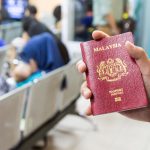
Since residents of Saint Barthélemy hold French passports, the Vietnam visa for Saint Barthélemy citizens is processed exactly as it would be for any French national. The good news: French passport holders are fully eligible for the 90-day Vietnam E-visa, valid for either single or multiple entries.
Here’s what you need before you sit down to apply:
- Valid French passport — must remain valid for at least 6 months beyond your intended departure date from Vietnam
- Digital passport-quality photo — white background, face clearly visible, taken within the last 6 months
- Passport biographical page scan — clear, unobstructed, no glare
- Entry and exit dates — you’ll need to specify your intended travel window
- Accommodation address in Vietnam — a hotel name and address is sufficient for the first night
- Valid email address — your approved E-visa arrives digitally
- Payment method — international credit or debit card (Visa, Mastercard)
Processing under the standard tier takes approximately 3 business days. Urgent processing — for those who’ve left it to the last minute — can be turned around in as little as 2 to 4 hours. The E-visa fee is currently around USD $25 for the standard version. Once approved, you can print it or simply save it to your phone — Vietnamese immigration officers at all major ports accept both formats.
No embassy visit. No appointment. No queuing in Gustavia on a Tuesday morning. You apply from the terrace of your villa and receive the approval by email. That’s the 2026 reality.
Denied Boarding at SBH or CDG: What Happens When Your Visa Isn’t Ready
Let me paint you a picture. It’s 6:45 in the morning. You’re at Gustaf III Airport (SBH) in St. Jean, about to catch the small prop flight to Saint Martin (SXM) for your connection to Paris Charles de Gaulle (CDG), and then onward to Hanoi (HAN). Your bags are packed with linen shirts and reef-safe sunscreen.
The check-in agent at CDG scans your passport and pauses. “Your E-visa doesn’t appear to be valid,” she says. You show her the email. She shakes her head. There’s a formatting discrepancy between the name on the visa and the name on your French passport. Your flight boards in two hours and forty minutes.
This scenario plays out more often than the industry likes to admit. When it happens, travelers have exactly one viable option: the Super Urgent Visa Service, which dispatches your corrected application through priority government channels and can deliver a clean, verified E-visa approval within 2 to 4 hours — sometimes faster if you catch the team early in the morning Vietnam time (GMT+7).
The moment you realise there’s a problem, you go to visaonlinevietnam.com, explain the situation in the support chat, and let the emergency team take over. Do not attempt to resubmit yourself — a duplicate application in the system will slow everything down.
💡 Expert Insight from Stanley Ho: “Over my 20+ years handling travel logistics, the most frequent disruption occurs at the check-in desk due to simple application formatting errors. If you are stuck at the airport and denied boarding, don’t panic — our emergency team can secure a new E-visa clearance through priority channels within hours, saving your flight.”
The French Passport Trap: Name Formatting Errors That Kill Applications
This is the section I wish I’d written ten years ago. It would have saved hundreds of French-passport holders from completely avoidable heartbreak.
French passports — including those issued to Saint Barthélemy residents — are rich with accented characters. The letter é alone appears in a staggering number of French surnames: Léger, Rémy, Ménard, Bélair. Then there’s è, ê, ô, à, û, î, ï, ü, ç… the full glorious complexity of the French language encoded in a document that the Vietnam E-visa portal sees as a block of plain ASCII text.
Here’s the problem. On your French passport, your name might appear as RENÉ LEFÈVRE. The E-visa application system, however, strips diacritical marks and expects the romanised version: RENE LEFEVRE. Simple enough in theory. Where people go wrong is when they copy their name directly from a digital scan of their passport — many OCR tools misread É as E but occasionally output corrupted characters or special symbols that the portal rejects outright.
Compound and hyphenated surnames are another common landmine. MARIE-CLAIRE DUPONT-LEBLANC has both a hyphenated given name and a hyphenated surname. The portal’s name fields have character limits and specific hyphen-handling rules. Enter the name incorrectly and your visa is issued to a person who, technically, doesn’t match the passport presented at Noi Bai immigration. That’s a problem.
A few hard rules when filling in the application as a French passport holder:
- Remove ALL accent marks and diacriticals — replace é/è/ê with E, ô with O, ç with C, ü/ù with U, and so on
- Enter names exactly as they appear in the MRZ strip at the bottom of the passport’s biographical page (the two rows of machine-readable text)
- For hyphenated names, check whether the portal accepts hyphens — if not, substitute a single space
- Double-check before you submit. Then check again
The Vietnam visa for Saint Barthélemy citizens gets rejected — or creates airport-level chaos — almost exclusively because of this one issue. Get the name right and the rest of the process is genuinely straightforward.
Skip the Queue: VIP Fast-Track at Vietnam’s Airports
Saint Barthélemy has a way of calibrating your expectations around service. When you live somewhere that charges €25 for a croissant and considers a 20-minute wait at a restaurant an outrage, you develop a certain intolerance for slow immigration queues.
Good news: you don’t have to endure them.
Vietnam’s major international airports — Noi Bai (HAN) in Hanoi, Tan Son Nhat (SGN) in Ho Chi Minh City, and Da Nang (DAD) — all offer a premium VIP Airport Fast-Track service that bypasses the standard arrivals queue entirely. A personal concierge meets you at the gate or at the aircraft door, escorts you through a diplomatic/priority immigration channel, and has you past customs and in a car before most economy-class passengers have even found the immigration hall.
For business travelers connecting to meetings in Hanoi or Ho Chi Minh City, this isn’t an indulgence — it’s a time calculation. For holidaymakers arriving after a 20+ hour journey from the Caribbean via Europe, it’s simply the only way to start a trip well. Book the fast-track service at the same time you apply for your E-visa. The price is modest relative to the time and energy it saves.
How to Apply for Your Vietnam E-Visa in 2026
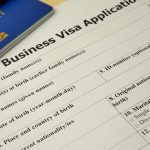
The process is not complicated. Here is exactly how it works:
- Go to the official application portal — visaonlinevietnam.com or the Vietnamese government’s official e-visa portal
- Enter your personal details — use your French passport’s romanised name (no accents, as described above), date of birth, passport number, and nationality
- Specify travel dates and entry point — select your planned arrival airport (HAN, SGN, or DAD are the most common for international arrivals)
- Upload your photo and passport scan — passport biographical page, white-background portrait photo
- Review everything carefully — particularly the name fields. This is where 90% of errors happen
- Pay and submit — standard processing takes 3 business days; urgent takes 2–4 hours
- Receive your approval by email — print it out or save it to your phone. Both are accepted at Vietnamese ports of entry
That’s it. No embassy appointment, no physical documents mailed anywhere, no visa sticker. The E-visa is a clean digital document and Vietnamese border officials are well-accustomed to processing it in 2026.
Frequently Asked Questions
Can Saint Barthélemy residents get a visa on arrival in Vietnam in 2026?
No — and I want to be completely clear on this. The old VOA approval letter system, where you’d pay a travel agency to issue you a pre-clearance letter to collect a visa stamp at the airport, is dead. It no longer exists as a legitimate, legal pathway for tourists in 2026. The Vietnam E-visa — applied for online before you travel — is the correct and only standard route for French passport holders visiting Vietnam.
How long is the Vietnam E-visa valid for French (Saint Barthélemy) passport holders?
The E-visa is valid for up to 90 days, available in both single-entry and multiple-entry formats. For travelers planning to visit neighbouring countries like Cambodia, Laos, or Thailand and re-enter Vietnam, the multiple-entry version is the smarter choice.
My French surname has accents — will that cause problems with the Vietnam E-visa?
It can, yes — but only if you handle it incorrectly. Enter your name exactly as it appears in the machine-readable zone of your passport, stripping all accent marks and replacing them with their plain-letter equivalents. If you’re unsure how your name should appear, hold your passport under a lamp and read the bottom two lines of the biographical page. That romanised version is what the system expects.
Can I extend my Vietnam E-visa once I’m already in the country?
E-visa extensions are theoretically possible through Vietnamese immigration authorities, but the process is bureaucratically slow and not guaranteed. My strong recommendation: apply for the 90-day version from the start, even if your initial plan is a shorter trip. It costs the same, saves you the headache of mid-trip extension paperwork, and gives you the flexibility to linger in Hoi An for an extra week when — not if — you fall in love with the place.
Is the Vietnam E-visa accepted at all entry points?
The E-visa is accepted at all 33 official international border gates, including all major airports (HAN, SGN, DAD), sea ports (including cruise entries), and major land crossings. For travelers flying from Gustavia via Saint Martin or via Paris, the airport entries at Hanoi or Ho Chi Minh City are the standard and most straightforward arrival points.
About the Reviewer: Stanley Ho is the CEO of VisaOnlineVietnam and a recognized expert consultant in the international aviation and travel service industry. With decades of experience navigating complex immigration regulations, Stanley and his team specialize in providing seamless visa solutions, fast-track airport services, and emergency travel assistance for global citizens visiting Vietnam.